Why ‘one and done’ doesn’t work: the science behind how your child learns life skills

By Kristin Westberg – Senior Director, Training & Evaluation

Think about how your child learned to ride a bike. Did they master it after one explanation? Of course not. They practiced over and over, fell down, tried again and eventually, it clicked.

That’s exactly how First Tee’s life skills work, too.

When your child learns about STAR (Stop, Think, Anticipate, Respond) during their first golf session, they’re just getting introduced to the concept. But they’re also focused on their grip, wondering if they’ll make the putt, and probably thinking about what’s for dinner. That first exposure is just the beginning.

The real learning happens through repetition

The magic happens when your child encounters STAR again and again in different situations. Maybe their coach references it after a bad shot: “Remember STAR? Let’s stop for a second. What happened there?” Now they’re connecting it to a real moment of frustration.

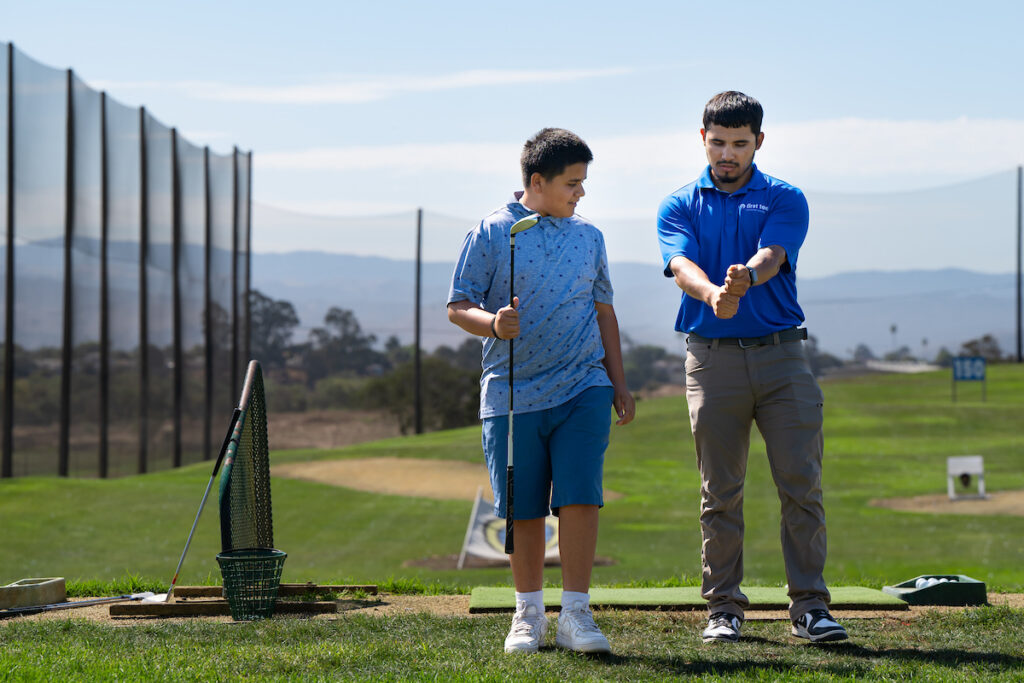
Each time First Tee coaches revisit a life skill, they’re helping your child see patterns and build a framework they can access when emotions run high. They’re showing that these aren’t just things “Coach says” but tools they can apply off the golf course.

Take the 4 Rs: Relax, Replay, Ready, Redo. The first time a coach walks your child through this after a mishit, they’re hearing four steps while feeling embarrassed. But by the fifth or tenth time, you’ll start seeing them do it on their own. They’ll take a deep breath, step back, and reset — not because someone explained it perfectly once, but because their coach consistently showed them how.
What the science says

Here’s what research tells us about how kids learn (and what you probably already know from watching your own child):

Kids need to see concepts in multiple contexts before they can transfer them. Their brains are literally building neural pathways that get stronger each time they practice. One exposure creates awareness. Multiple exposures create competence. In fact, learning research suggests people typically need about seven exposures to new information before they can truly retain and apply it, which is why consistent coaching across different situations matters so much.

Developmentally, your child isn’t the same kid they were six months ago. The 8-year-old who needed help thinking through consequences is now 9 and ready to anticipate them more independently. When coaches revisit life skills, they’re meeting your child where they are now.

You might hear your child’s coach reference the same life skill multiple times throughout the season, and that’s intentional. They’re not being redundant; they’re being effective. Here’s how First Tee coaches reinforce learning:

  • Naming it when they see it. When your child demonstrates grit or uses a life skill independently, coaches call it out in the moment.
  • Connecting across contexts. Coaches reference the same life skill in different situations – on the green, on the range, in the classroom and more.
  • Asking reflection questions at the end of each class. “Where else have you used STAR this week?”
  • Modeling it themselves. Coaches let participants see them using these skills when facing their own challenges.
  • Celebrating progress, not perfection. Coaches notice when your child applies a life skill even imperfectly because that’s growth.
Supporting this learning at home

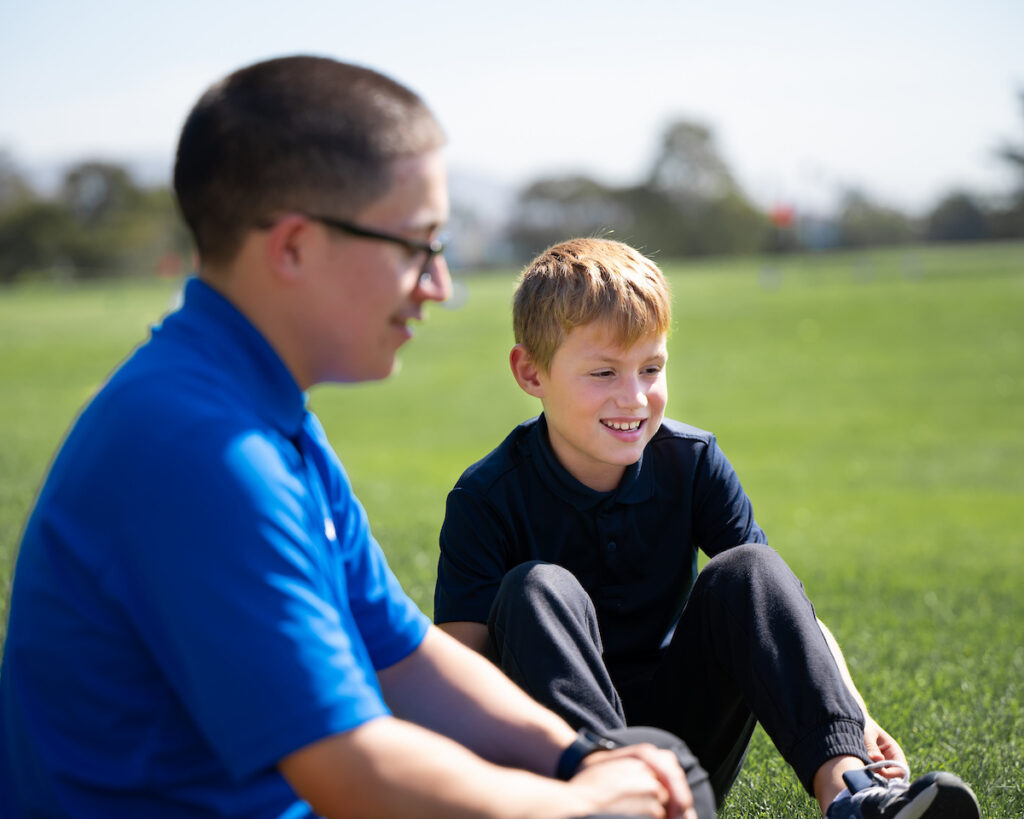
The beauty of First Tee’s approach is that these skills extend far beyond the golf course. When you hear your child mention STAR, the 4 Rs, or FAIL (First Attempt In Learning), you can reinforce what they’re learning:

  • Ask them to explain the skill to you
  • Notice when they use it at home and acknowledge it
  • Reference it yourself during challenging moments
  • Be patient — just like with golf, mastery takes time

The goal isn’t to “cover” a life skill once and check the box. The goal is to help your child internalize these skills so deeply that they become automatic, building something that lasts long after their time on the golf course.

So when you hear the same concepts come up again and again throughout the season, know that it’s all part of the plan. Each conversation, each reminder, each connection is building the foundation for the game changer your child is becoming.
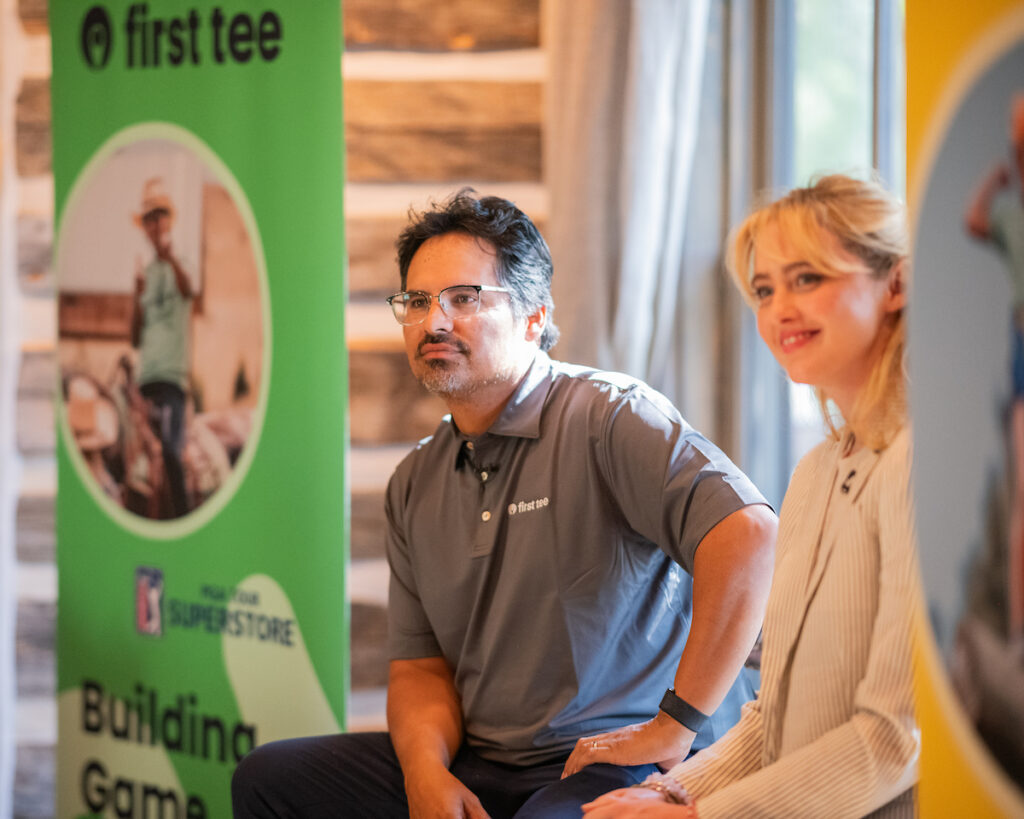
Actor, avid golfer Michael Peña joins First Tee as Brand Ambassador

Peña will support First Tee’s efforts to bring its game-changing golf and life skills curriculum to young people from all backgrounds

PONTE VEDRA BEACH, Fla. (Feb. 20, 2026) – Youth development organization First Tee is proud to announce that actor Michael Peña has joined the organization as a Brand Ambassador. As a longtime golfer, Peña is enthusiastic about bringing the sport and its inherent values to families across the globe. 

Known for roles in films and television series including “Ant-Man,” “A Million Miles Away” and the recent hit series, “All Her Fault,” Peña has been a dedicated supporter of First Tee since 2023, when he first attended the organization’s annual Leadership Summit as a guest speaker. The Summit brings together teen participants from First Tee chapters across the country for leadership development, networking and golf. 

As a Brand Ambassador, Peña will support First Tee’s efforts to reach kids from all communities with programming that uses golf as a vehicle to help young people build inner strength, self-confidence and resilience. Through First Tee’s network of 150 chapters, the organization serves young people ages 5-18 with programs that extend beyond the golf course and into participants’ homes, schools and communities. First Tee also offers robust scholarship and alumni programs

An accomplished golfer himself, Peña regularly competes in pro-am events and has witnessed firsthand how the game can positively impact its players. 

“Golf has been an important part of my life, teaching me patience, discipline and how to handle both success and failure,” Peña said. “I’m honored to become a Brand Ambassador and help First Tee reach even more young people with programs that will help them succeed on the golf course and beyond.” 

“Michael’s genuine passion for golf and his commitment to empowering young people make him an ideal Brand Ambassador as we work to reach more kids with our life-changing programs,” said First Tee CEO Greg McLaughlin. “Michael has inspired teens at our Leadership Summit with his authenticity and his message about the power of perseverance. We are grateful he is taking his valuable time and energy to support First Tee.”  

First Tee reaches more than 3 million young people annually through programming at chapters, schools and community centers. Peña joins three existing First Tee Brand Ambassadors: Actress and First Tee alumna Kathryn Newton and PGA TOUR players Alex Smalley and Austin Smotherman, who is also a First Tee alumnus. 

Encouraging every player to shine: How First Tee addresses gaps in golf skills  

If you’ve ever worried about signing your child up for a new activity because they might be “behind” other kids, you’re not alone. It’s a common concern among parents, and one we hear when families are considering First Tee programs. 

Here’s what we want you to know: At First Tee, we’ve designed our approach so that every participant can learn, grow and have fun, regardless of where they start. 

We’ve found kids and teens genuinely enjoy being around their peers. That’s why most First Tee Chapters offer age-based programming, rather than grouping kids by skill level. This allows players to connect, laugh and learn from each other in ways that transcend golf skills. 

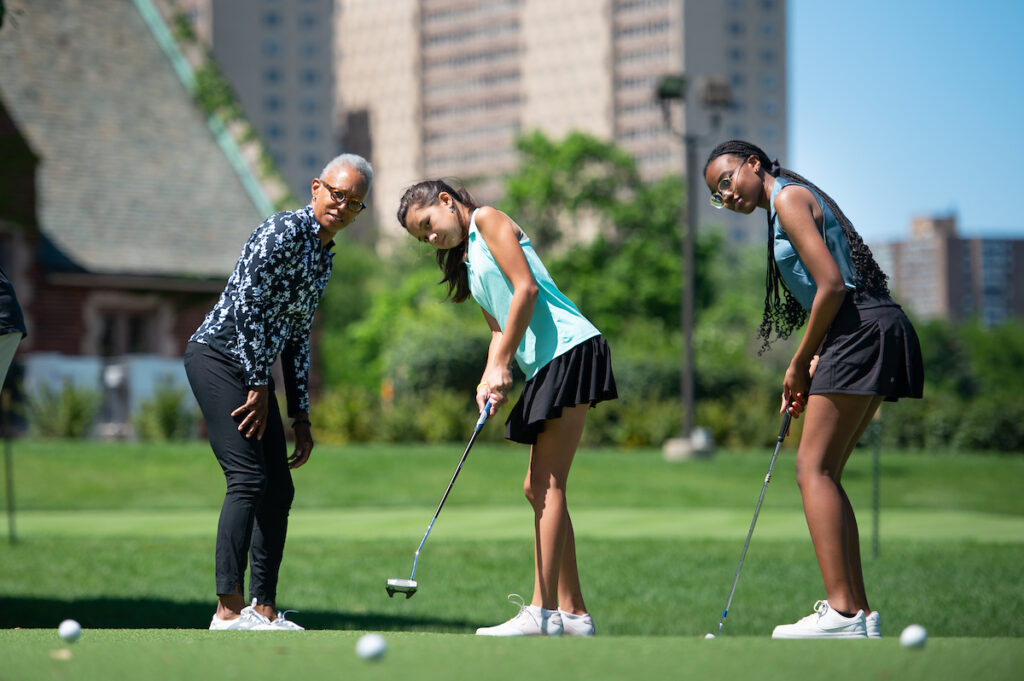
“First Tee coaches intentionally create optimal learning environments for participant success — fostering friendship, golf skill development and fun on the course,” said Lauren Kyaw, manager of First Tee’s coach program. “Through coaching strategies and coachable moments, coaches meet participants where they are and guide them toward mastery.” 

But we also know that a 10-year-old who’s never held a golf club has different needs than a 10-year-old who plays regularly. That’s why our coaches take a thoughtful, individualized approach within each class. 

How we make it work 

At the start of each session, our coaches determine where each participant stands with their golf skills, not through an assessment but by observing their performance in fun games and drills. This isn’t about labeling anyone or creating pressure but about understanding how we can best support each player’s journey. 

From there, we use several strategies to ensure everyone is appropriately challenged and engaged: 

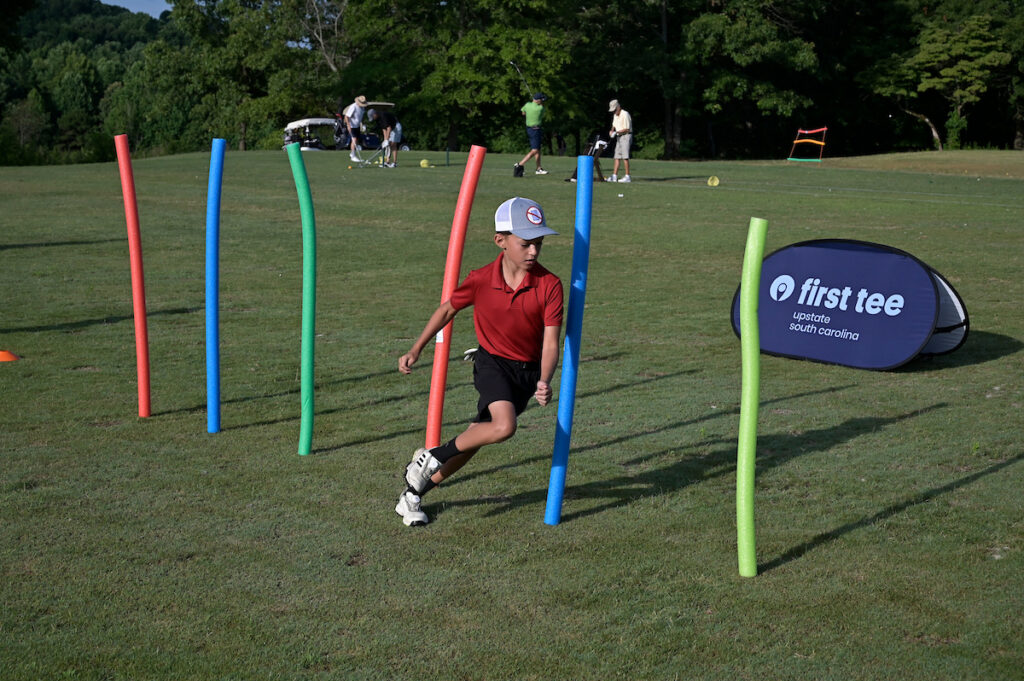
Personal Par is one of our favorite concepts. Instead of holding everyone to the same standard, we encourage each player to set their own goals for activities. A beginner might aim to make contact with the ball three times in a row, while a more advanced player might work on hitting a specific target. Both students are working hard, both are achieving something meaningful and both are experiencing success. 

Flexible grouping means that while the class stays together as a unit, we’ll group players by skill level when introducing more complex techniques. At the same time, we intentionally pair advanced players with beginners during team challenges. This builds camaraderie across skill levels and allows everyone to contribute their strengths. 

Optimal challenge ensures that activities cater to multiple skill levels. Every student faces appropriate challenges … not too easy, not too frustrating, but just right for where they are in their development. 

The power of peer mentorship 

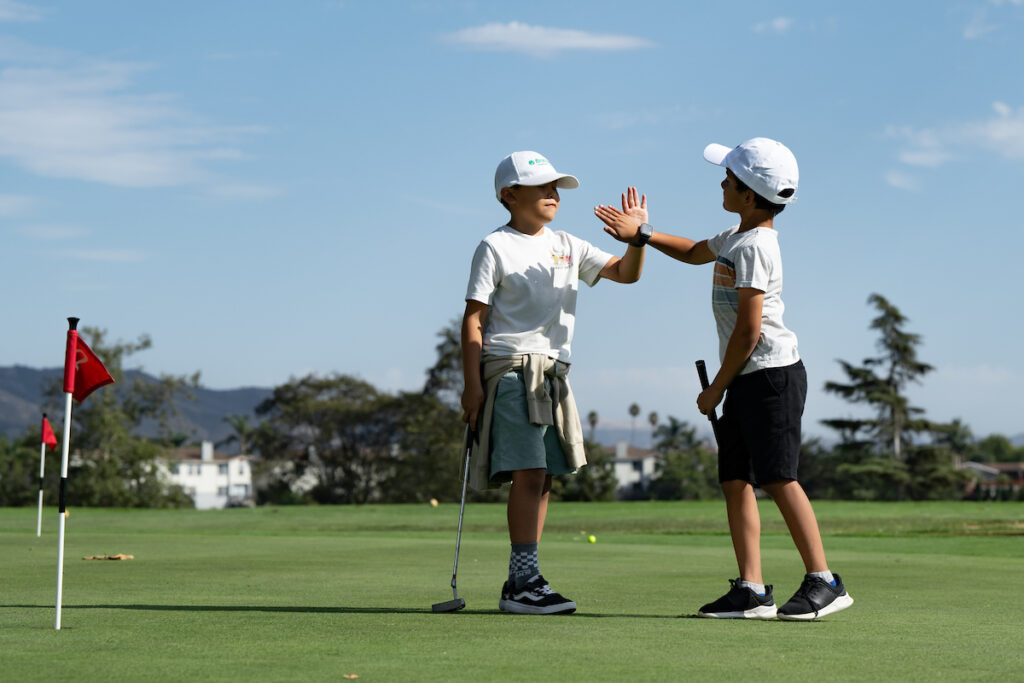
Here’s something special that happens when you mix skill levels: advanced players become natural leaders and mentors. We’ve seen countless students light up when given the opportunity to help a classmate or demonstrate a skill. This doesn’t just reinforce their own learning, it builds confidence, empathy and leadership abilities that extend far beyond the golf course. 

Many chapters also offer teen activities where golf isn’t the focus. From opportunities to build leadership skills, like teen advisory boards, to social events, like movie nights, bowling and other outings, these activities allow players of all skill levels to interact and build friendships off the course. 

Coaching that adapts to each student 

Our coaches understand that feedback isn’t one-size-fits-all. A student who’s just starting out might need encouragement and simple adjustments, while a more experienced player might benefit from more technical guidance. Our coaches modify their feedback to fit each player’s needs and learning style, ensuring that everyone receives the support that will help them improve. 

Your child doesn’t need to know anything about golf to thrive in a First Tee program. They don’t need to be naturally athletic or have prior experience. They just need to show up ready to try, to learn and to be part of a community that values growth over perfection. 

“Regardless of participants’ golf skill level, coaches bridge activities back to everyday life, helping youth overcome challenges, set goals and deal with adversity,” Kyaw said. “This ties back to First Tee’s mission and purpose: empowering participants to build character and instill life-enhancing values through golf, values they will carry far beyond the course.” 

Learn more about supporting First Tee. 

At what age should my child start playing golf? 

If you’re wondering when your child is ready to start playing golf, you’re asking the right question. The good news? There’s no single “perfect” age to begin, but there are some helpful guidelines. 

Most First Tee chapters offer age-based programming – typically starting with 7–9-year-olds – so participants play alongside their peers, who are usually at similar stages of development in terms of attention span, strength and hand-eye coordination. That said, younger children can certainly be introduced to golf, and some First Tee chapters do this in playful, age-appropriate ways.  

It’s about more than the swing 

At First Tee, we’ve seen firsthand that starting golf isn’t just about learning to hit a ball: It’s about what the game teaches you along the way. Through golf, kids develop perseverance when a shot doesn’t go as planned, integrity when keeping score and respect for others sharing the course. These character-building moments happen whether your child picks up golf at 7 or 17. 

Our programs are designed to meet kids where they are developmentally, focusing on fun, skill-building and life skills education.  

Rather than focusing solely on age, consider whether your child: 

  • Shows interest in the game (maybe they’ve watched golf on TV or asked about it) 
  • Can follow basic instructions  
  • Enjoys outdoor activities and trying new things 
  • Is ready to practice patience — golf rewards persistence, not perfection 

Starting Points Beyond Age 

The right time also depends on the environment you’re introducing them to. Programs like First Tee emphasize inclusivity, character development and creating a welcoming space for beginners. This supportive atmosphere can make all the difference, regardless of when your child starts. 

If your child is older and just discovering golf, that’s perfectly fine too. We’ve seen teenagers find their passion for the game and develop the same valuable life skills as those who started younger. Golf is a lifelong sport, and there’s truly no age when it’s “too late” to begin. 

Find a First Tee chapter near you and give your child the opportunity to experience the game that teaches so much more than golf.